I was walking through the Rolls-Royce factory when I saw something that stopped me mid-tour: an American client was finalising the specification for her sixth Rolls-Royce—and asked for her dog’s face to be embroidered into the seat leather. Not a paw print. Not an initials tag on a dog bed. A full portrait, stitched into the upholstery that most people treat with gloves.
It was a perfect snapshot of what ultra-luxury has become in 2025: not louder, not flashier—more personal. The highest expression of wealth isn’t the rarest paint or the biggest engine; it’s the ability to make an object tell your story, right down to the thread count and the pixel of a pupil.
Inside the Request: What “Bespoke” Really Means
“Bespoke” is one of the most abused words in luxury. In mainstream fashion it can mean anything from a limited run to a different button. At Goodwood, it means craftsmen who can turn a drawing, memory, or family crest into something you can touch every day.
Here’s how a request like a dog portrait actually comes to life:
- Artwork capture
The client provides a favourite photograph. The design team creates a high-resolution vector drawing, simplifying fur textures and shading into stitchable forms. - Digitised embroidery map
The portrait is translated into a file that tells the machine exactly how to layer thousands of stitches: direction, density, thread order. Think of it as haute couture CAD. - Material matching
Leather isn’t flat like fabric; it stretches and breathes. The technicians test threads against final hides to ensure colours don’t bleed, warp, or fade. If the portrait sits on a headrest, the foam density behind the leather may be adjusted so the embroidery remains crisp. - Prototype & approval
A test panel is produced for sign-off under daylight-grade lighting. Sometimes multiple versions are made—slightly warmer chestnut for the eyes, a softer cream for muzzle highlights—until it feels alive. - Final installation
The finished hide is integrated into the seat build. Perimeter stitching, piping, and seat perforation patterns are coordinated so the portrait isn’t visually “fighting” for attention.
It’s painstaking. It’s expensive. And it’s exactly why clients keep coming back for car number six.
Why People Fall in Love With This Level of Detail
A dog in the leather isn’t a gimmick; it’s a statement about attachment. We don’t bond with objects because they’re perfect—we bond because they’re personal. At this tier, luxury design behaves like jewellery or a tailored suit: it becomes part of your identity.
Three emotions bespoke taps into:
- Memory – A pet outlives a season and trends; it archives a relationship.
- Belonging – Family crests, initials, or even a favourite poem stitched into the glovebox lining turn a car into a private space, not just a status symbol.
- Agency – You direct the orchestra. The car is as much your creation as the brand’s.
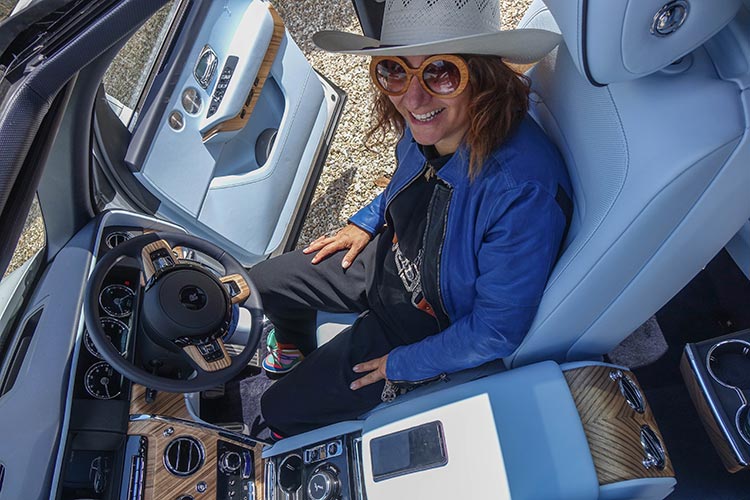
When the unboxing moment happens—doors open, soft-close latches whispering shut—these details land like a secret handshake. You don’t have to show anyone. But you can.
From Options List to One-of-One
The mass-luxury market is a sea of configurators: fifty paint colours, five veneers, three wheel designs. Ultra-luxury starts after the configurator runs out. That’s where themes like “one-of-one” and “coachbuild” live.
A few trends I’m seeing among serious collectors:
- Narrative cabins
People commission cabins built around a story—travel maps in marquetry, constellations stitched into headliners, coloured enamel inlays to match heirloom watches. - Material honesty
Hand-brushed metals, open-pore woods, and matte ceramics are replacing mirror-gloss everything. Texture > bling. - Personal iconography
Pets, zodiac motifs, skate brands, favourite bands—it’s all on the table. The more “you,” the better. - Quiet signatures
Hidden engravings under armrests or behind sun-visors. Details meant for the owner alone.
The dog portrait sits right in the sweet spot: whimsical but refined; visible but not vulgar; deeply personal without needing explanation.
The Craft Challenge: Making Whimsy Look Expensive
There’s a fine line between charming and cheesy. The difference is craft.
- Scale & placement
A headrest is a natural canvas; it frames a portrait without cluttering sightlines. Anything larger risks novelty. Anything smaller turns into a blob. - Colour discipline
Match thread colours to interior tones. A portrait in soft neutrals (ecru, mushroom, sand) feels integrated; primary colours scream. - Texture hierarchy
If the portrait is detailed, keep the neighbouring elements calm: matte leather instead of gloss, minimal perforation, discreet piping. - Repetition restraint
You don’t need the dog on every seat. One motif, placed with intent, carries more weight.
When these principles are respected, the cabin remains elegant—and the personal detail reads like fine marquetry, not a decal.
Loyalty at the Top End: Why a Sixth Rolls-Royce?
Because once a brand proves it can translate your ideas without compromising taste, you stay. It’s not just the car; it’s a relationship with a studio. The atelier knows your palette, your tolerances, your “no go” zones. They remember the cigar case spec from car three and the headliner constellation from car four. Commissioning becomes smooth, even fun.
That’s the moat. Not horsepower. Not lap times. Trust.
Ethics & Sustainability: The Question Nobody Asks (But Should)
Personalisation shouldn’t be an excuse for waste. The best houses are moving toward:
- Traceable hides with audited welfare standards.
- Repairability—panels designed to be removed and restored, not replaced.
- Durable finishes that age with grace instead of requiring constant replacement.
- Responsible sourcing for woods and metals with credible certification.
A bespoke request is an opportunity to specify better, not just rarer.
If It Were My Spec…
I love the idea of a subtle pet homage. I’d place a monochrome line-art portrait—tone-on-tone stitching—on the rear centre cushion, paired with a hand-engraved silhouette on the door metalwork. No colour, no contrast, just a whisper you notice on the second look. For a travel-heavy life, I’d add:
- Open-pore walnut with a satin finish
- Soft-matte calf in almond and truffle
- A single accent thread that echoes a favourite watch strap
- Discreet monogram under the armrest lid (for me, not for Instagram)
Thinking of Commissioning Something Personal? Here’s a Quick Playbook
- Start with the story
Is it a memory, a motto, a place, a companion? One clear idea beats a bag of tricks. - Bring reference images
Photos of the pet in clean light, samples of fabric, even a lipstick shade—anything that nails the tone. - Decide your “loudness level”
On a scale of 1–10, is this a 3 (subtle embossing) or a 9 (full-colour embroidery)? Share that number with the designer. - Edit ruthlessly
One hero detail, then everything else supports it. If the portrait is in play, keep piping, perforations, and contrast stitching restrained. - Think about longevity
A palette you’ll love in ten years beats a trend. Consider how the detail will age: patina can be beautiful. - Ask the sustainability questions
Where do the materials come from? Can the panel be repaired? Are finishers using low-VOC treatments? - Request a prototype
Approve on a test panel and under different light. Leather changes character between daylight and showroom LEDs.
The Takeaway
Watching that client specify her sixth Rolls-Royce—dog portrait and all—didn’t read as excess. It read as devotion: to a craft house that listens, to objects that outlast moods, to the small companions who anchor our lives.
Luxury is moving away from “mine is bigger” to “mine is me.” And that’s far harder to copy.
What would you stitch into your seats? A crest, a constellation, a lyric? Tell me your idea—and if you’re speccing soon, I’m happy to sanity-check a palette or placement before you commit.