McQueen is the perfect case study for what the luxury industry is quietly remembering: aura is finite. After years of overexposure, endless product, and that tragic McQ diffusion line, the house has started to pull back. Distribution is tightening, access is shrinking, and suddenly the brand feels interesting again. Prestige dies the moment everyone can get in.
I’ll be honest – I fell out of love with McQueen for a while. When the logo hoodies, sneakers and endless outlet stock started doing the rounds, that feeling of “you’re lucky to own this” turned into “oh, everyone owns this”. The decision to kill McQ in 2022 was brutal but necessary. You can’t rebuild mystique while you’re still flogging the bargain-bin cousin.
And that’s really the bigger question haunting luxury right now:
Are you playing the long game, or are you selling out for quarterly numbers?
Because when you look at where Dolce & Gabbana, Gucci and even Bottega Veneta are heading, you can feel the tension between those two paths.
Dolce & Gabbana: maximalism without the magic
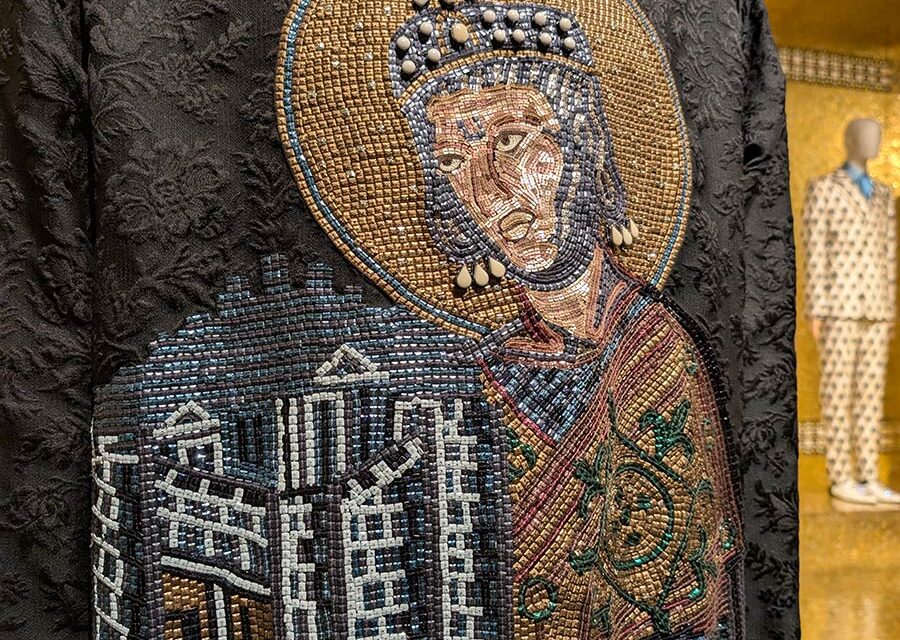
Dolce & Gabbana used to feel rich. Not just in price, but in construction: heavy embroideries, dense lace, robust fabrics that hugged and sculpted. Clothes with weight, in every sense.
Now? The storytelling is still loud – Sicily, famiglia, baroque Catholic drama – but too many pieces don’t back up the fantasy when you touch them. Thinner fabrics, lighter linings, zips that don’t feel like they’ll outlive your grandchildren.
It’s not that everything is bad – couture-level pieces and runway showstoppers clearly still have serious work in them – but the entry-level RTW and accessories often feel like they’re riding on the label more than the craftsmanship.
That’s the danger zone: when customers start saying,
“I’m paying Dolce prices for something that doesn’t feel Dolce anymore.”
Once that perception sticks, no celebrity campaign can save you.
Gucci: from cultural moment to logo fatigue
Gucci under Alessandro Michele was a cultural earthquake. For a few years, it was the fashion language: clashing prints, grandma cardigans, nerd-chic everything. That kind of success is intoxicating – and dangerous.
Because success like that encourages one thing: more.
More product, more drops, more logos, more collaborations, more make-up, more sneakers, more outlets, more everything.
And when “more” becomes the business model, quality is usually the first to bend. Not dramatically at first – just a slightly thinner knit here, a lower-grade lining there, hardware that doesn’t feel as solid, bags that don’t age as beautifully as older pieces. But luxury customers notice. They always do.
Gucci is now stuck in a tricky transition. The world has swung towards “quiet luxury” and fewer logos, while Gucci is still dealing with the hangover of being the loudest brand in the room for years. Raising prices and trimming collections is one thing; rebuilding trust in product quality is another.


Bottega Veneta: when “stealth wealth” becomes a trend
Bottega was once the insider’s whisper. No logo, just leather so soft and construction so precise that you knew what it was from across the room. “When your own initials are enough” wasn’t just a tagline; it was a philosophy.
The recent era of Bottega has been hugely successful – the Pouch, the Jodie, the Padded Cassette, the puddle boots. Instagram catnip. Waiting lists. Every influencer in the world draped in intrecciato.
But with that explosion came the same old risk: scale.
When you’re churning out massive volumes of “it” bags, you’re asking your workshops to do Formula 1 speeds with haute-couture expectations. Unless you protect the craft ferociously, something gives.
People are now comparing older Bottega pieces to newer ones. The question isn’t “Is this nice?” – it’s “Is this still Bottega nice?” If the answer starts drifting towards “not quite”, you’ve traded away the very thing that set you apart.
Everyone wants to be Hermès – except in the ways that matter
This is the funniest and saddest part of the debate: everyone wants Hermès margins, Hermès waiting lists, Hermès resale values. Nobody wants Hermès discipline.
Hermès has played the long game for decades:
- No outlet stores.
- No massive discount seasons.
- Scarcity that is real, not performative.
- Craft as the non-negotiable centre of the brand.
- A refusal to chase every micro-trend on TikTok.
You cannot “catch up” to that in five years with a few price hikes, a “VIP only” capsule and some performative scarcity. You can’t inflate your way into reverence.
Yet that’s what a lot of brands are trying:
- Jack up prices to Hermès-adjacent levels.
- Flood social media with aspirational campaigns.
- Produce at near-fast-fashion speed.
- Then talk about “heritage” and “craftsmanship” as if the product still reflects it.
Customers aren’t stupid. If the stitching isn’t flawless, the leather isn’t aging beautifully, the seams don’t sit right and pieces don’t survive dry-cleaning without drama, they feel it. You can have Hermès prices without Hermès soul – and right now, that’s where a lot of big names are drifting.
The real split: obsession vs transaction
The core divide in luxury today isn’t logo vs no logo, or quiet vs loud. It’s this:
- Obsession brands – the ones that make you dream, save, wait, and cherish. They defend their aura with ruthless selectivity and uncompromising product.
- Transaction brands – the ones that treat you as a metric. How many units can we sell this quarter? How many SKUs can we spin from this monogram? How many influencers can we dress this season?
McQueen pulling back is a move back towards obsession. They overexposed, they felt it, and they had the courage to slam the brakes and shut down the fugly line that was eroding the name. That’s painful in the short term – but it protects the brand in the long term.
Dolce & Gabbana, Gucci, Bottega and others are at that crossroads in different ways. They can’t keep playing the volume game, cheaper-feeling quality, and then wonder why people no longer gasp when they walk past the store.
Consumers have changed – brands haven’t caught up
The industry still behaves as if the customer is blinded by logos and billboards. But after years of overconsumption, economic anxiety and resale platforms exposing real product value, shoppers are far more critical.
People are asking:
- Does this feel like it will last ten years?
- Why does my vintage piece feel better made than the new one?
- Is this price about craftsmanship, or about shareholders?
- If everything is “exclusive”, why does it all end up on sale?
Consumers are tired of brands cheapening themselves just for the sale – flash sales, outlets, collaborations with anything that moves – and then lecturing them about “timeless luxury”. The long game is about consistency, not hype.
So, where does the debate land?
The luxury sector is standing in the exact tension you’ve described:
- Play the long game like Hermès: fewer stores, tighter distribution, obsessive quality, lower volume, higher loyalty, slower but deeper growth.
- Sell out: more product, more collabs, more diffusion lines, more discounts, more speed, more investors to appease – and a slowly eroding sense of prestige.
McQueen seems to be choosing the former. Dolce & Gabbana, Gucci, Bottega Veneta and others are somewhere in the messy middle, wanting Hermès-level status while still behaving like volume-driven fashion houses.
In the end, the customer will decide. If people start buying vintage, niche brands, independent artisans and truly obsessive houses instead, the message will be clear:
We don’t just want Hermès prices.
We want Hermès principles.
Until the big players accept that, they’ll keep circling the same problem: you can’t be an obsession if you act like a sale.