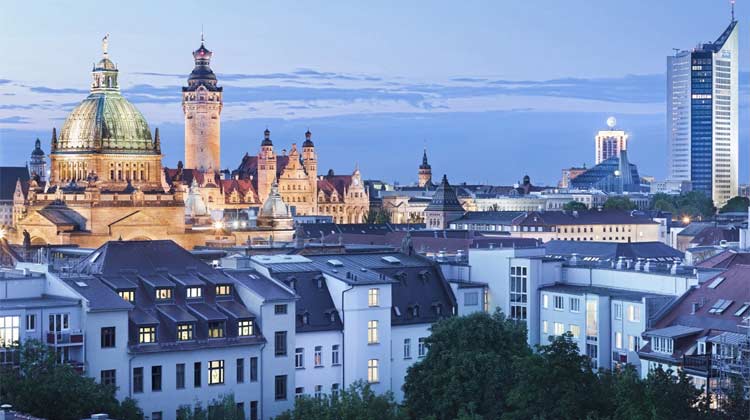
Leipzig is a city of transformation — and in 2025 that feeling is written into its streets.
Long before the Second World War, Leipzig was already known across Europe as a trading powerhouse, a place where commerce, music and ideas moved as quickly as goods. Bach worked here for decades, shaping the city’s cultural identity in a way that still lingers today, from the concert halls to the quiet corners of the old town.
Then came the rupture. The heavy Allied bombing of the war years left scars, and the decades that followed behind the Iron Curtain brought a different kind of damage: neglect, limited investment, and the slow fading of a once-confident centre of industry and culture. After reunification, the story became even more complicated. Jobs shifted, opportunities moved west, and for a time Leipzig felt like a place people were leaving rather than arriving.
But cities have their seasons — and Leipzig has found a new one.
These days, Leipzig is regularly described as one of eastern Germany’s most exciting urban success stories: creative, energetic, affordable (by big-city European standards), and increasingly international. The media loves a nickname — “Hypezig”, “the new Berlin”, “boomtown” — but beyond the headlines there’s something real happening: a sense of momentum, a growing startup scene, and neighbourhoods that feel lived-in rather than staged. It’s a city where heritage and reinvention coexist, and where the past doesn’t sit behind glass — it shares the pavement with the future.
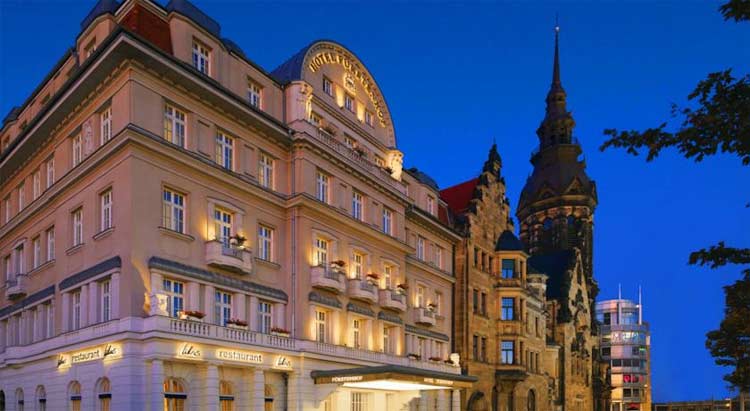
Right in the heart of this evolving Leipzig, just a five-minute walk from Leipzig Hauptbahnhof, sits one of the city’s most storied addresses: Hotel Fürstenhof.
A grand entrance in the middle of the city
My arrival was by train from Berlin, which is exactly how Leipzig should be approached — effortlessly, on rails, with the landscape shifting outside the window. The ICE journey is quick and comfortable, and it delivers you into one of the most impressive stations in Germany: Leipzig Central is not only vast and architecturally beautiful, it’s also a destination in itself, doubling as a large indoor shopping centre that makes arriving feel unusually civilised.
From there, it’s an easy walk to the hotel. Within minutes, the mood changes: the pace drops, the noise softens, and you’re suddenly in a world of polished floors, warm lighting, and that particular hush that only grand hotels seem to master.
Hotel Fürstenhof occupies a historic building that began life as a patrician city palace for the Löhr family in the late 18th century, before becoming a hotel in the late 19th century. You feel that lineage immediately — not in a dusty, museum-like way, but in the proportions: high ceilings, generous corridors, and the kind of architectural confidence you don’t see in modern builds.
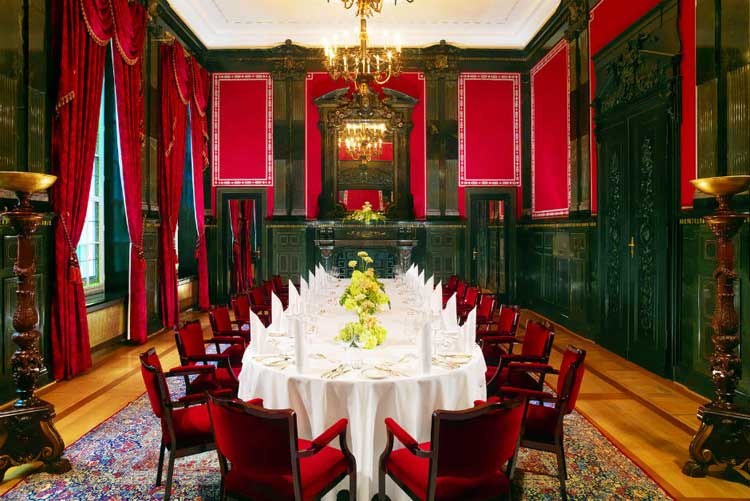
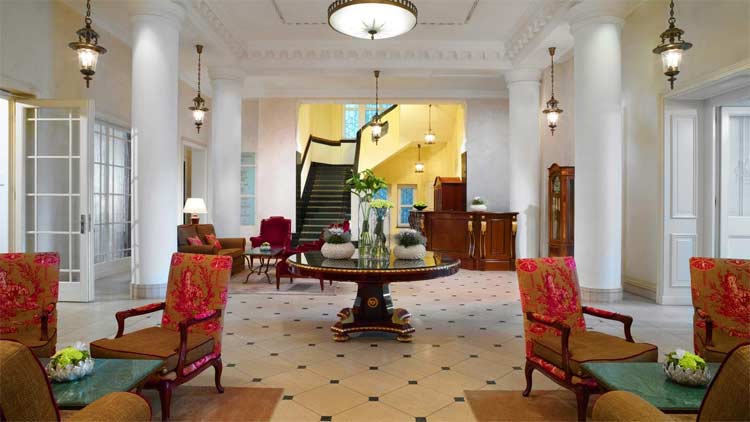
The reception area is elegant without trying too hard. It also acts as the hotel’s social crossroads, connecting you naturally to the winter garden, the wine bar, and Restaurant Villers — which, as it turns out, is a destination in its own right.
The winter garden: afternoon tea, then cocktails
After checking in, I made my way straight to the winter garden, which quickly became my favourite place in the building.
During the afternoon it has a softer, slower atmosphere — perfect for tea and cake, and ideal if you want to settle into Leipzig’s rhythm without rushing. There’s a piano, and while there wasn’t a pianist during my visit, the space still held that classic European hotel mood: relaxed elegance, daylight filtering in, and the gentle hum of guests coming and going.
Later, I returned for pre-dinner cocktails — and the energy had shifted. The winter garden came alive in a different way: business travellers unwinding, tourists comparing notes, small groups leaning into conversation. It felt social but not chaotic, the kind of room where you can enjoy your drink alone with a book or end up chatting with someone at the next table without it feeling forced.
That’s one of the things Fürstenhof does well: it creates spaces that invite you to pause.
Vinothek 1770: a wine bar with stories on the walls
I also spent time in Vinothek 1770, the hotel’s wine bar — and if you love places with character, you’ll enjoy this one.
There’s a playful sense of history here, with the signatures of notable guests displayed on the lids of wooden wine boxes, turned into wall décor. It’s charming, slightly eccentric, and very Leipzig: culture, memory, and a little theatricality.
The bar offers an impressive range of open bottles — around 80 — spanning different regions and styles, and it’s the kind of place where you can keep it simple with a glass of something crisp and bright, or take your time exploring with the staff’s guidance. Pair it with antipasti or cheeses and it becomes an easy, stylish evening in its own right.
-
The Deluxe Room: classic comfort, done properly
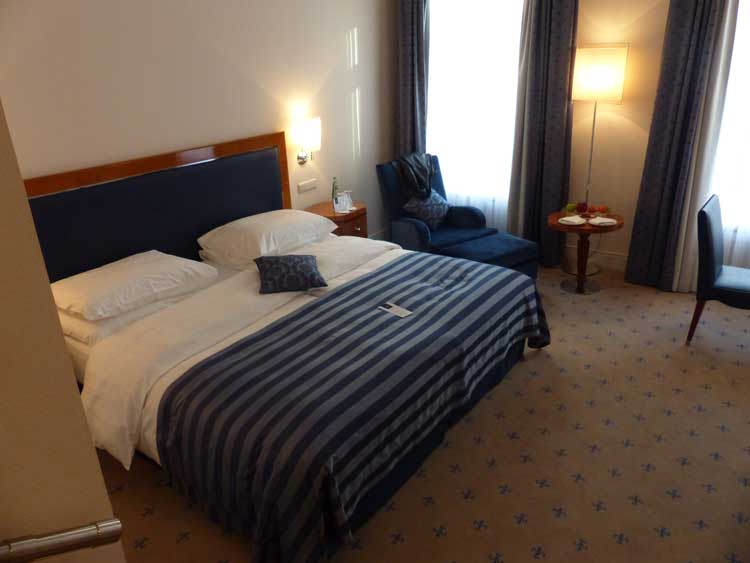
I stayed in a Deluxe Room, and it hit that sweet spot many luxury hotels aim for but don’t always achieve: spacious, calm, and genuinely comfortable.
At around 30m², the room felt easy to live in rather than simply sleep in. The king-size bed was exactly what you want after travel — supportive, cosy, and dressed in linen that makes you want to cancel plans and stay wrapped up for another hour. I love the small rituals that good hotels still maintain, and I was greeted with pastries, fruit, and a personal message from reception — a simple touch, but one that immediately sets a tone of hospitality rather than transaction.
The furniture and detailing carried a quiet sense of quality: nothing loud, nothing trend-chasing, just that reassuring feeling of a hotel that understands its own identity.
The bathroom was equally well considered. Two sinks (a small luxury that makes mornings smoother), a separate shower cabin, and a good-sized bathtub that actually invites you to use it, not just admire it. If you’re the kind of traveller who believes a hotel bathroom should feel like a private sanctuary, this one delivers.
Restaurant Villers: the kind of dinner you remember
Restaurant Villers is the hotel’s in-house restaurant, and it delivered one of my most memorable dining experiences to date.
It’s not just “good for a hotel restaurant” — it’s simply excellent. The setting feels refined without being stiff, service is attentive without hovering, and there’s a sense of confidence in the kitchen that you can taste. The Chef de Cuisine, Hannes Schlegel, has the kind of control and creativity that turns a meal into an experience — not in a gimmicky way, but in the way every detail feels intentional.
I’ve written a dedicated feature on Villers because it deserves its own spotlight, but even as a teaser: this is a restaurant you could happily visit even if you weren’t staying at the hotel.
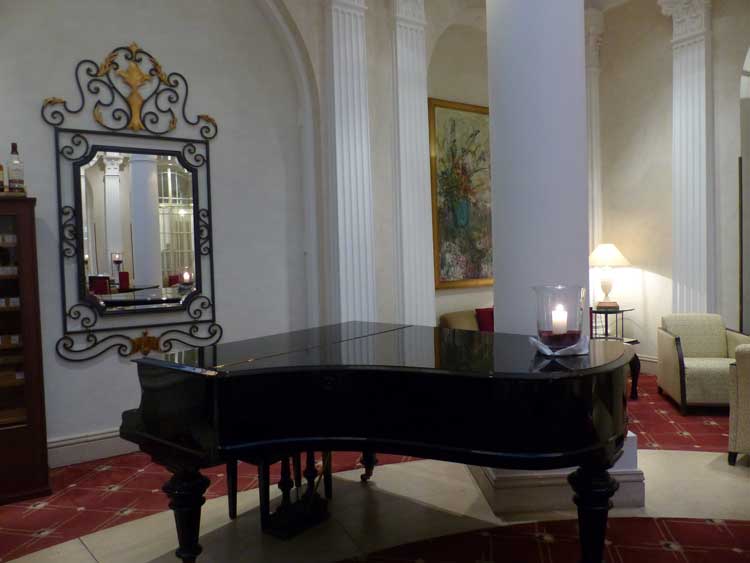
- Wintergarten – piano bar


Deluxe Room


AquaMarin: a spa that feels like a mini-escape
One afternoon I headed down to AquaMarin, the hotel’s pool and spa area, and it genuinely surprised me.
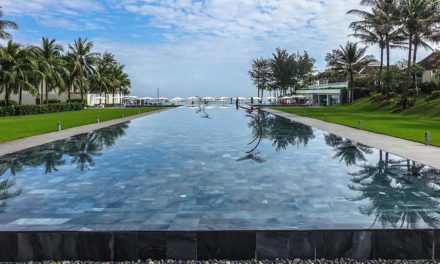
The aesthetic is bright and almost Mediterranean — blue water against white walls, greenery placed in a way that softens the space, elevated sections and a rock waterfall that gives it a slightly escapist feel. For a moment, it didn’t feel like I was in a central German city at all. I could imagine how uplifting it would be in deep winter, when Leipzig’s grey days make warmth and colour feel like luxuries.
The spa facilities include a Finnish sauna, a Roman steam bath, and a shower grotto — a detail that felt both unusual and memorable. For anyone who travels and tries to keep routines intact, there’s also a well-equipped gym with both cardio and weights, which makes it easy to stay consistent without leaving the building.
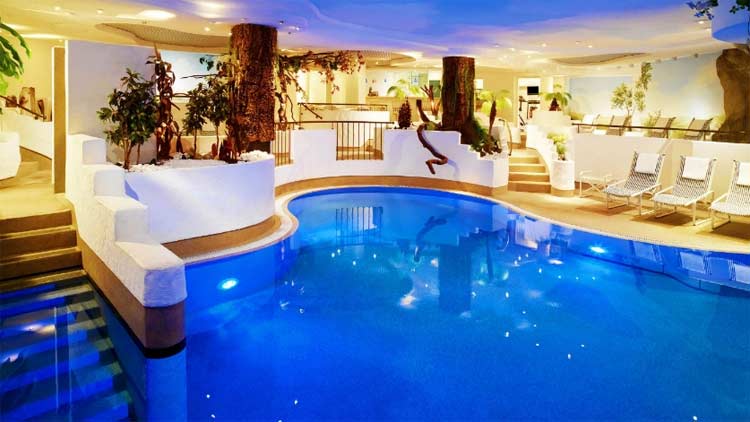
- AquaMarin – Little Greece in the hotel’s basement
Breakfast and the feeling of being hosted
Breakfast was served in the same area as Villers, and it continued the impression of quiet quality.
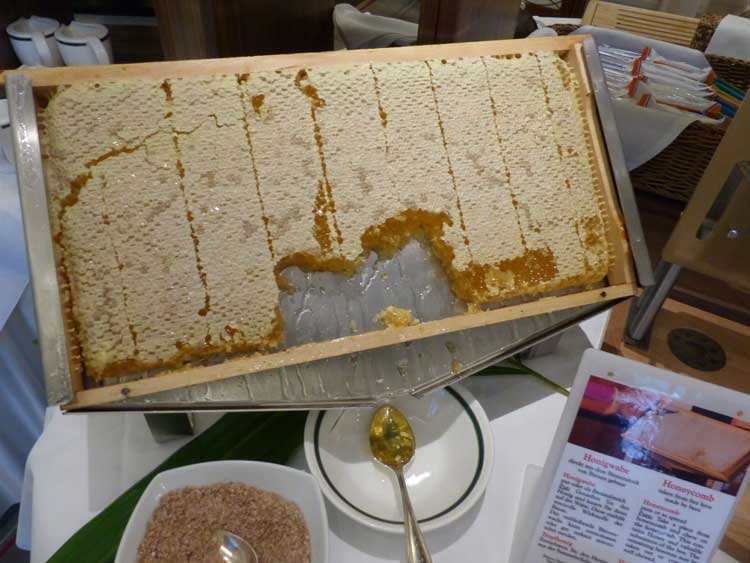
The selection was wide, fresh, and health-forward without being joyless — exactly what you want at the start of a travel day. There’s also a personal egg station, with eggs cooked to order, which adds that touch of care that separates a strong breakfast from a forgettable one.
What stayed with me most, though, was the staff. There’s a difference between “professional service” and genuine hosting, and here it felt warm, human, and quietly proud — as if they weren’t just working in a hotel, but looking after a house with history.
Why Fürstenhof works so well for Leipzig
Leipzig is a city of contrasts: Bach and startups, old trade routes and new creative neighbourhoods, deep history and constant reinvention. Hotel Fürstenhof fits into that story perfectly.
It’s central, elegant, and genuinely comfortable — but it also has the emotional quality that the best hotels carry: it makes you slow down. It invites reflection. It gives you a sense of being somewhere, not just passing through.
With the old town on your doorstep, Leipzig Zoo close by, and the city’s cultural life within easy reach, it’s the kind of base that makes a short trip feel richer than expected.
Life has its ups and downs — and travel, at its best, gives you space to breathe between them. If you want Leipzig to feel like an experience rather than a checklist, Hotel Fürstenhof is the kind of place that helps you do exactly that.
Conclusion
Details
- Room reviewed: Deluxe Room – From €145
- Address: Troendlinring 8, Leipzig, 04105, Germany
- Website: www.hotelfuerstenhofleipzig.com
- Phone: +49 341 140 0