Brooklyn’s creative energy hums at the crossroads of street art, indie music, and effortlessly cool hair—and few stylists translate that vibe quite like Kenna Kennor. Known publicly as actress Britt Lower’s husband yet celebrated within the beauty industry for his own merits, Kennor has become a quiet architect of the current “let it breathe” movement.
Rather than forcing hair into rigid moulds, he coaxes out each client’s natural pattern, believing that movement, imperfection, and authenticity spark the kind of confidence no lacquered style could ever match.
A Stylist With an Ear for Personal Stories
Visit Kennor’s Greenpoint studio on any given afternoon and the first thing one notices is not the equipment but the listening. He opens every appointment with an easy conversation—half consultation, half therapy—mining childhood memories of unruly ringlets or teenage battles with frizz to understand a client’s relationship with texture. That empathy guides his scissors more than any trend report.
By the time the cape settles, clients sense they have been heard rather than judged, and the resulting cut feels like an expression of their biography instead of a seasonal look ripped from a runway.
Embracing Curl Patterns Instead of Fighting Them
For decades, curly-haired clients were taught to blow-dry, straighten, or chemically relax their spirals into submission. Kennor upends that legacy with deliberate gentleness: he shapes curls in their dry, natural state to honor the genuine spring and shrinkage of each coil. Lightweight leave-in conditioners replace heavy creams, and diffusers are set to low heat to respect delicate cuticles.
He often jokes that water is his favorite styling product, misting sections to revive bounce before snipping micro-adjustments. The goal is a cut that grows out gracefully and empowers clients to air-dry at home without complicated rituals—an approach that feels downright revolutionary amid the gadget-driven hair-care aisle.

The Lived-In Texture Philosophy
Kennor’s signature “lived-in” finish resists the temptation to over-polish. Instead of shine serums and hard gloss sprays, he favours airy sea-salt mists that lend a hint of grit, making fresh trims seem as though they have already settled into day-three perfection. This ethos attracted lifestyle outlet Critical Hit, which highlighted how he “brings movement and life to every look” in a recent feature—readers can explore that perspective here: CriticalHit.
The article’s praise mirrors what clients experience: a head of hair that looks effortlessly great from the moment they leave the salon until their next visit, ageing like denim rather than wilting like flowers.
Quiet Innovation Behind the Chair at Kennaland
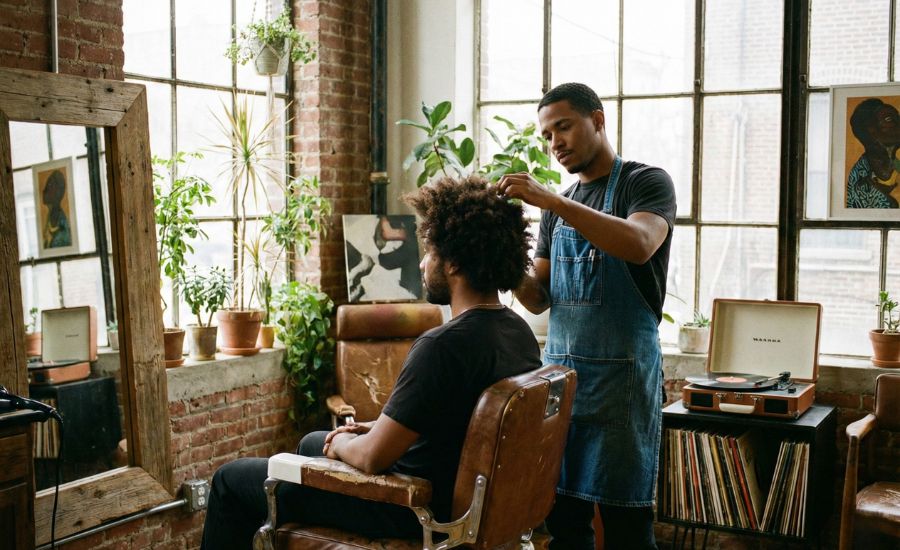
Kennor’s studio, Kennaland, feels more like an artist’s loft than a traditional salon. Vintage chairs mingle with salvaged wood mirrors, and there is almost always an obscure vinyl spinning in the background. Yet the innovation is hardly aesthetic alone. He experiments with razor-cutting techniques adapted from textile design, slicing subtle channels that release weight without obvious layers.
Eco-friendly brands fill the back bar, chosen as much for their clean ingredient lists as for their ability to keep curls buoyant. Apprentices are taught to observe hair in motion—asking clients to tilt, shake, and stretch strands—so that geometry, not guesswork, dictates every cut.

A Growing Community of Texture Advocates
What began as a lone chair in East London years ago has evolved into a transatlantic ripple effect. Young stylists flock to Kennaland’s workshops, eager to learn a craft rooted in restraint rather than control. Social-media before-and-after reels spread the gospel of liberation from flatirons, sparking conversations about self-acceptance in comment threads worldwide.
Meanwhile, Britt Lower’s red-carpet appearances—where her hair often reflects Kenna’s touch of irregular waves and gentle volume—serve as visible proof that “undone” can still register as elegant. By championing natural curls and lived-in texture, Kenna Kennor not only rewrites beauty standards but also reminds an image-conscious culture that the most compelling style stories are the ones we allow our hair to tell for itself.